By Skye Chaney, Adaptive Athlete & Dirty Freehub Gravel Champ
Adventure is all about freedom. Getting outside, exploring new places, tackling challenging terrain, and seeing where the trail takes you. But one thing I’ve learned as an adaptive cyclist is that a great adventure starts with being prepared.
When you’re riding an adaptive bike, especially in remote areas, a mechanical problem can become a much bigger challenge than it might be for someone riding a traditional bike. You can’t always just hop off, walk your bike out, or easily reach every component to make a repair.
That’s why I believe every adaptive rider should learn how to self-rescue and carry the tools and supplies needed to handle trail repairs independently.
And here’s something important: Even when I’m riding with a group, I carry everything I would need if I were riding solo. Friends are great, but being prepared gives me the confidence to explore farther and enjoy the adventure.
A Little About Me
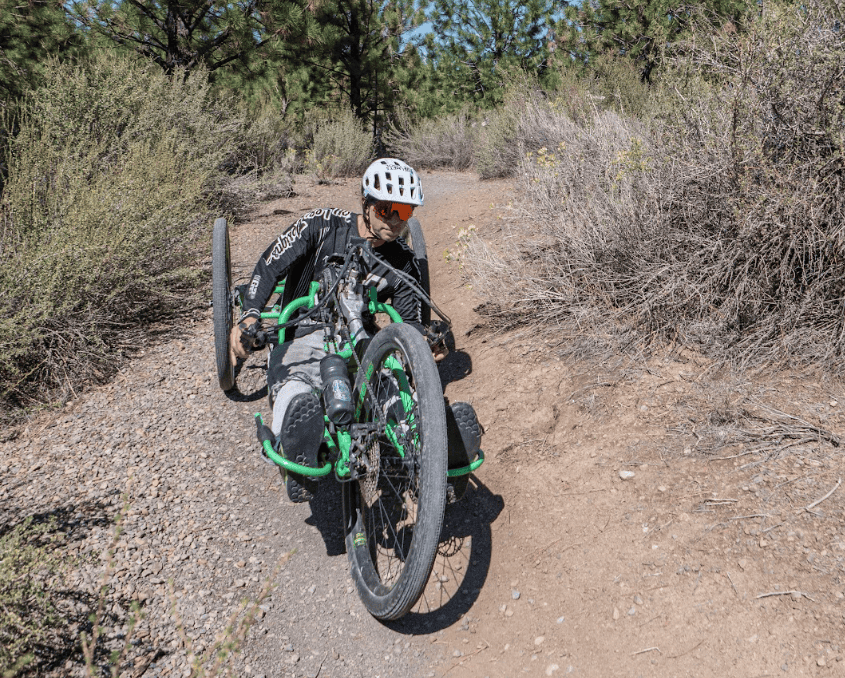
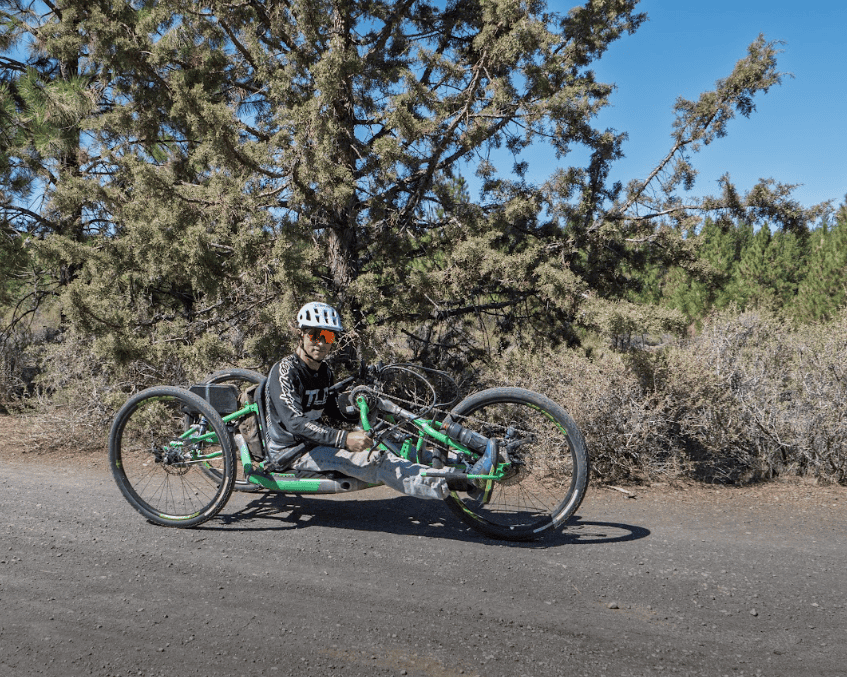
I’m Skye Chaney, an adaptive cyclist and outdoor athlete based in Bend, Oregon. In 2017, I was mountain biking the famous Porcupine Rim trail in Moab, Utah, when a crash resulted in a spinal cord injury that left me unable to walk. But my love for the outdoors wasn’t going anywhere. I found my way back to adventure through adaptive kayaking, mono-skiing, and eventually an adaptive mountain bike, with help from Craig Hospital in Colorado. Since then, I’ve ridden trails across the West, participated in adaptive cycling programs and competitions, and continued exploring what’s possible on three wheels. Today, I’m also a Dirty Freehub Gravel Champ, helping inspire more people to discover the freedom and joy of cycling, regardless of how they ride.
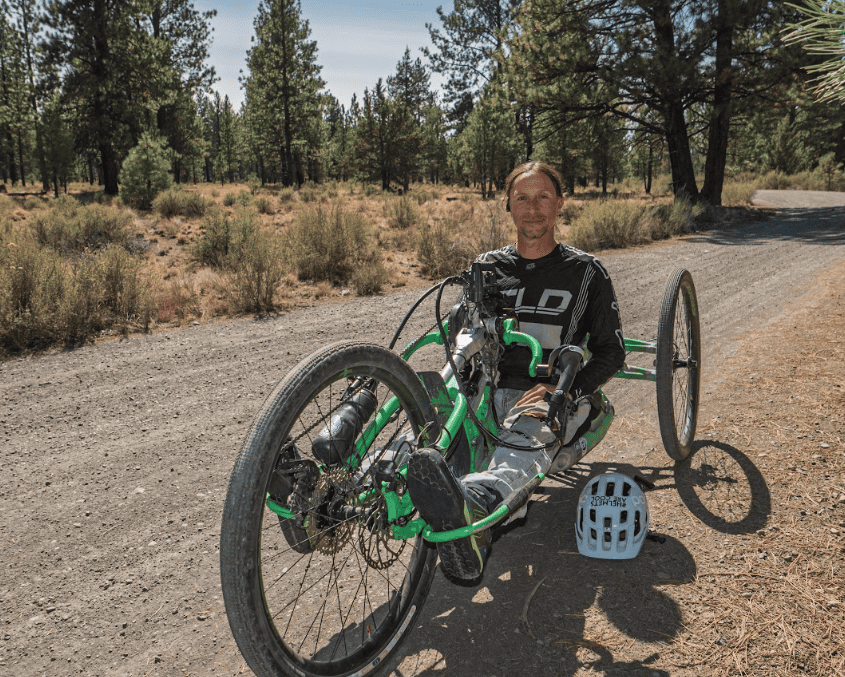
My Must-Have Gear for Every Ride
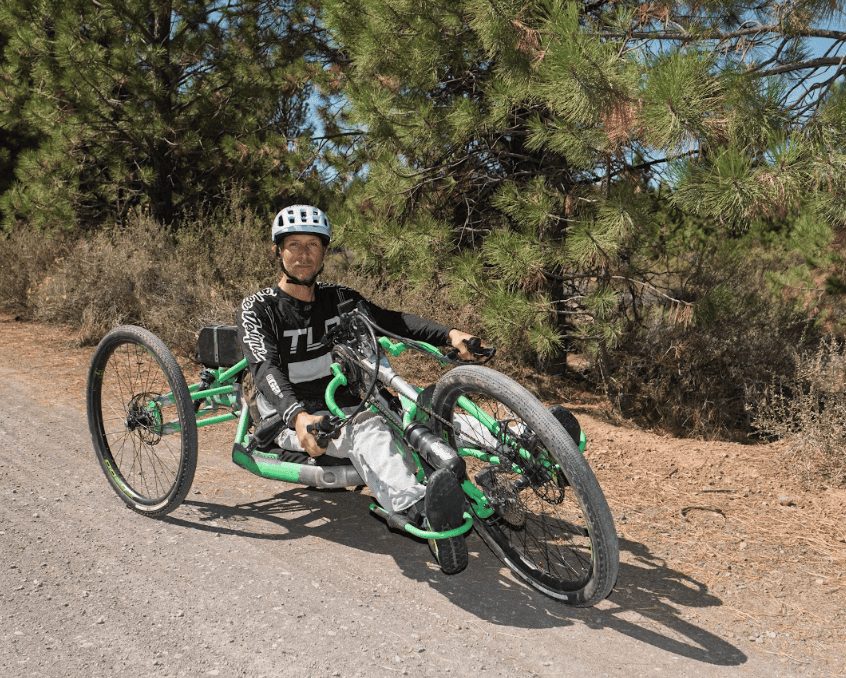
Here’s my standard packing list. Some items are specific to my adaptive bike, while others are things I think every cyclist should carry.
1. Tire Repair Essentials
Flat tires happen. And when you’re miles from the trailhead, knowing how to fix one can make the difference between a great adventure and a very long day.
- Spare tube and patch kit: Even with a tubeless setup, I carry a backup tube and patches.
- Pump: A reliable pump that works with my tires.
- Tubeless tire plugs: These can quickly seal punctures without removing the tire.
- Extra sealant and valve core remover: Essential for repairing and maintaining a tubeless setup.
- Tire levers and CushCore Bead Bro: These make removing and reinstalling stubborn tires much easier.
- Spare tire: When I’m heading somewhere especially remote, I’ll bring an entire spare tire.
My advice? Don’t just carry the tools. Practice using them at home so you know exactly what to do when something goes wrong.
2. Adaptive Bike-Specific Spare Parts
Adaptive bikes often have specialized components that you won’t find at a typical bike shop, especially in remote areas.
I carry:
- Extra wires: For electrical connections that might become damaged.
- Spare throttle: A small but critical component on my bike.
- Spare controller: Because an electrical failure can bring an adventure to a sudden stop.
Every adaptive bike is different. Learn which components are most likely to fail on yours, which repairs you can realistically make on the trail, and what spare parts make sense to carry.
3. Tow Strap
This is one of those things I hope I never need, but I always want to have. A tow strap can be incredibly useful if my bike becomes disabled or I need assistance getting out of a difficult situation. Make sure you and your riding partners understand how to use one safely with your particular bike. Not every frame or component is designed to be pulled.
4. Garmin inReach Mini
I love exploring remote places, but cell service isn’t something I count on.My Garmin inReach Mini provides satellite communication and an emergency SOS capability when I’m outside cellular coverage, provided the device and subscription are active.
For adaptive riders, especially those heading into remote areas, having a reliable way to request help is an important part of planning. I also use the satellite to communications to let people know when I have arrived at different points on my journey.
5. Phone
Yes, I carry my phone too! It’s useful for navigation, communicating with riding partners, checking route information, and taking photos.
I make sure it’s charged before leaving and keep it somewhere I can reach easily. A phone is helpful, but I don’t rely on it as my only emergency communication device.
6. Small First Aid Kit
You don’t need to bring an entire medical clinic, but a compact first aid kit is a smart addition to any ride. Mine includes basic supplies for dealing with cuts, scrapes, and other minor injuries. I recommend tailoring your kit to your individual medical needs and the type of riding you’re doing.
7. Gorilla Tape
Here’s a simple trick: Wrap some Gorilla Tape around a small stem or similar object and tuck it into your repair kit. It takes up almost no space and can be surprisingly useful for temporary fixes, securing loose items, or holding something together long enough to get home.
8. Emergency Sugar Snack
I always keep some kind of sugary snack buried in my bag. Why buried? Because it’s my emergency backup, not the snack I eat five miles into the ride! So typically it’s a bar that isn’t my favorite so I am not tempted to eat it sooner.
A small supply of quick carbohydrates can be useful when energy starts running low or an unexpected delay turns a short ride into a much longer outing. Of course, I also bring enough food and water for the ride itself.
9. Face Cover
A lightweight face covering is one of those small items that can make a big difference. It helps with dust on dry gravel roads, cold air on chilly mornings, and wind on exposed sections of trail.
10. Tiny Microfiber Towel
This might sound like a funny addition to a survival kit, but clear vision matters! I carry a tiny microfiber towel for cleaning my glasses or goggles. Dust, mud, sweat, and rain can quickly make it difficult to see the trail.
The Most Important Thing I Carry? Knowledge.
You can have the best repair kit in the world, but it won’t do much good if you don’t know how to use it. I encourage adaptive riders to spend time learning their bikes. Practice changing a tire, plugging a puncture, troubleshooting electrical problems, and figuring out how to handle common mechanical failures. And think through your self-rescue plan before leaving the trailhead.
Can you reach the tools you need? Can you complete the repair from your riding position? What happens if your bike becomes completely disabled? Can you communicate your location to someone who can help?
I especially think people need to learn navigation tools. Do you know how to follow a map on your phone or bike computer? And do you have a backup application on your phone like Avenza that is easy to look at if you are lost?
Not every situation can be solved independently, and there’s nothing wrong with asking for help. Self-rescue is about having the skills, equipment, and plan to give yourself the best possible options.
About Dirty Freehub
Dirty Freehub is a nonprofit organization dedicated to inspiring gravel cycling adventures while helping riders develop a deeper appreciation for the landscapes, communities, history, and environment where they ride. With more than 350 curated Ride Guides covering over 14,000 miles, Dirty Freehub provides detailed route information to help cyclists explore with greater confidence. Its Gravel Champs program celebrates inspiring cyclists who demonstrate that adventure isn’t defined by speed, distance, or physical ability.
A Free Gravel Guidebook for Your Next Adventure!
As a Dirty Freehub Gravel Champ, I’d love to help you find your next adventure.
Use promo code SKYE when ordering a Dirty Freehub gravel guidebook and receive a free guidebook! Explore the Dirty Freehub Guidebook Store and start planning your next ride.